Posts

Showing posts with the label adhesions

Myofascial Release

Image
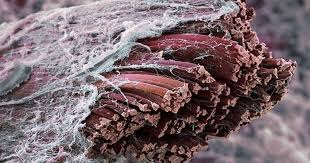
Myofascial release is becoming more known as people are experiencing the benefits of receiving this treatment.  'Myo' refers to muscle and 'fascia' refers to the material covering the muscle, so myofascial release is the process of loosening the tightness of the tissue. As you can see in the image below, the fascia surrounds the muscle fibers and also attaches itself in between the fibers.  This covering protects the muscle and keeps it in it's place. Fascia is throughout the entire body from head to toe. When there is tension due to daily activities, injury or emotional strain, the body's response is to send extra fascia tissue to the area to help support it. This tissue is sticky and referred to as an adhesion, which allows it to stick to the area in need. The less hydrated the system is, the more sticky the adhesions becomes. Eventually this leads to the feeling of having knots as the adhesions collect and become clumped together in stickiness. ...

Cupping 101

Image
Although the practice of cupping has been around for many years, it gained popularity during the summer Olympics and has continued to grow as word gets out that it works! What is cupping? Using glass, plastic or silicon cups placed strategically on the body a vacuum is created by using either a pump, by manually pressing or the traditional way of inserting a cotton ball set on fire into the cup and quickly removing it and placing the cup on the body.  Each of these techniques serve differently to treat a varying array of ailments, but all of them work on the principal of creating a vacuum which  pulls up the skin and the fluids beneath.  Does it work? There has been thousands of years of documented evidence through clinical and historical research that cupping is safe and effective. You would be hard-pressed to find western scientific studies, due to the nature of cupping. In a truly scientific study, you need a placebo and preferably the gold standard ...

Self Massage Tools - Do They Help or Hurt?

Image
So many tools, so little time!  We are in an era where tools for myofascial release abound. There are so many choices, that it can become confusing as to what tool to use for what issue and how often, how much and....  The confusion can go on and on. Let's try to unpack some of this to make it easier to understand. First of all it is important to understand what the purpose of these tools are for. Muscles build up tension from such stressors as exercise, poor posture, work and lifestyle habits and even from emotional stress. Have you ever been in terrible traffic for a long amount of time and found yourself reaching for your neck to give it a rub because it feels tight? Tightness that stress has caused initiates the body to respond by sending more fascia to the muscles in the area that is feeling stressed. Fascia is a thin sheath of fibrous tissue that encloses muscles and organs in the body. When extra is needed, it is produced with a stickiness to it...

CYCLING - The Benefits of Massage for Cyclists

Image
The Many Benefits of Massage for Cyclists (of all levels) Tammara - Massage Extraordinaire and Cycling Enthusiastic Not only is Tammara an Extraordinary massage therapist, she is also an avid cyclist.  Tammara gets a massage at least once a month and sometimes more often if she's dealing with a particular issue.  Her philosophy,  "The better I take care of myself, the better my body takes care of me." Massage Benefits for Cyclists: Help loosen tight spots Promotes recovery by flushing out toxic chemicals Keeps your fibers smooth and limber Relieves post-exercise pain Boosts heart health Prevents injury with the help of stretching Enhances performance Feels good!! Tammara shares how massage can benefit all parts of the body , which take a beating from cycling. " Massage helps TREMENDOUSLY for a cyclist.  Anyone who spends an hour or more in the same position on a bike will tell you that their low back, neck and shoulders can start compl...